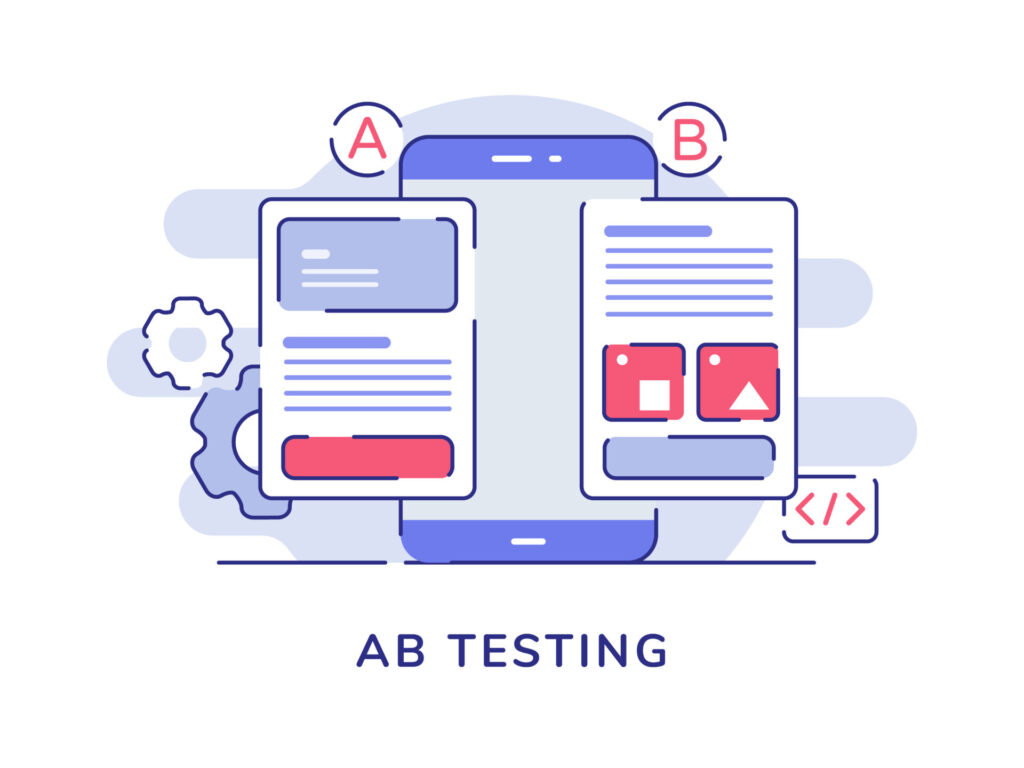
A/B testing, also known as split testing, is a method of comparing two versions of a website, email or ad to find out which one performs better. It is one of the most effective methods in conversion rate optimization (CRO) and is used by leading digital companies around the world.
What is A/B testing?
In an A/B test, you divide your traffic into two groups: group A sees the original version (control), while group B sees a new version with one change (variant). After enough data has been collected, you analyze which version produced the best results, e.g. highest click-through rate, lowest bounce rate or most conversions.
The key is that you only change one variable at a time, so you know exactly what caused the difference in results.
What can you A/B test?
A/B testing can be applied to almost any digital touchpoint:
Landing pages: Headline, images, CTA buttons, text length, color and layout.
Email campaigns: Subject field, sender name, send time, content length and CTA.
Google Ads and Meta Ads: Ad texts, images/videos, target groups and bidding strategies.
Product descriptions: Different tone of voice, length and structure in product texts.
Purchase flow: Number of steps in the shopping cart, payment options and trust markers.
How to conduct a good A/B test
- Define the goal: What do you want to improve? Click-through rate, sales, registrations? Be specific.
- Formulate a hypothesis: “I believe that a green CTA button will result in a higher click-through rate than a gray one”.
- Create the variant: Change only one thing from the original.
- Determine statistical significance: Wait until you have enough data (at least 95% confidence level).
- Analyze the results: Which version won? What can you learn from it?
- Implement and iterate: Roll out the winner and start the next test.
Common mistakes in A/B testing
Testing too early: Stopping the test before it has enough statistical basis gives misleading results.
Test too many variables at the same time: Then you don’t know what actually affected the result.
Ignore seasonality: Results can vary widely between periods. Run tests over a sufficiently long period of time.
Forget about mobile users: Always test both versions on mobile, tablet and desktop.
A/B testing isn’t a one-off event, it’s a continuous process where you gradually improve the user experience and conversion rate. Companies that systematically test and optimize achieve significantly better digital results over time.